When a used tire actually makes sense
If you are comparing used tires in Amarillo with a new set, here is the short answer. A used tire can be a reasonable choice for a low-mileage vehicle, a trailer that sits most of the year, or a same-day replacement after a flat when the budget is tight, provided it passes a careful inspection first. It is the wrong choice for a tire that will carry many highway miles, or when no one can tell you anything about the tire’s history. E&C carries both new and used tires and mounts them at your vehicle, so you can compare both options. Before you buy a used tire anywhere, here is what to check.
Check the tread before anything else
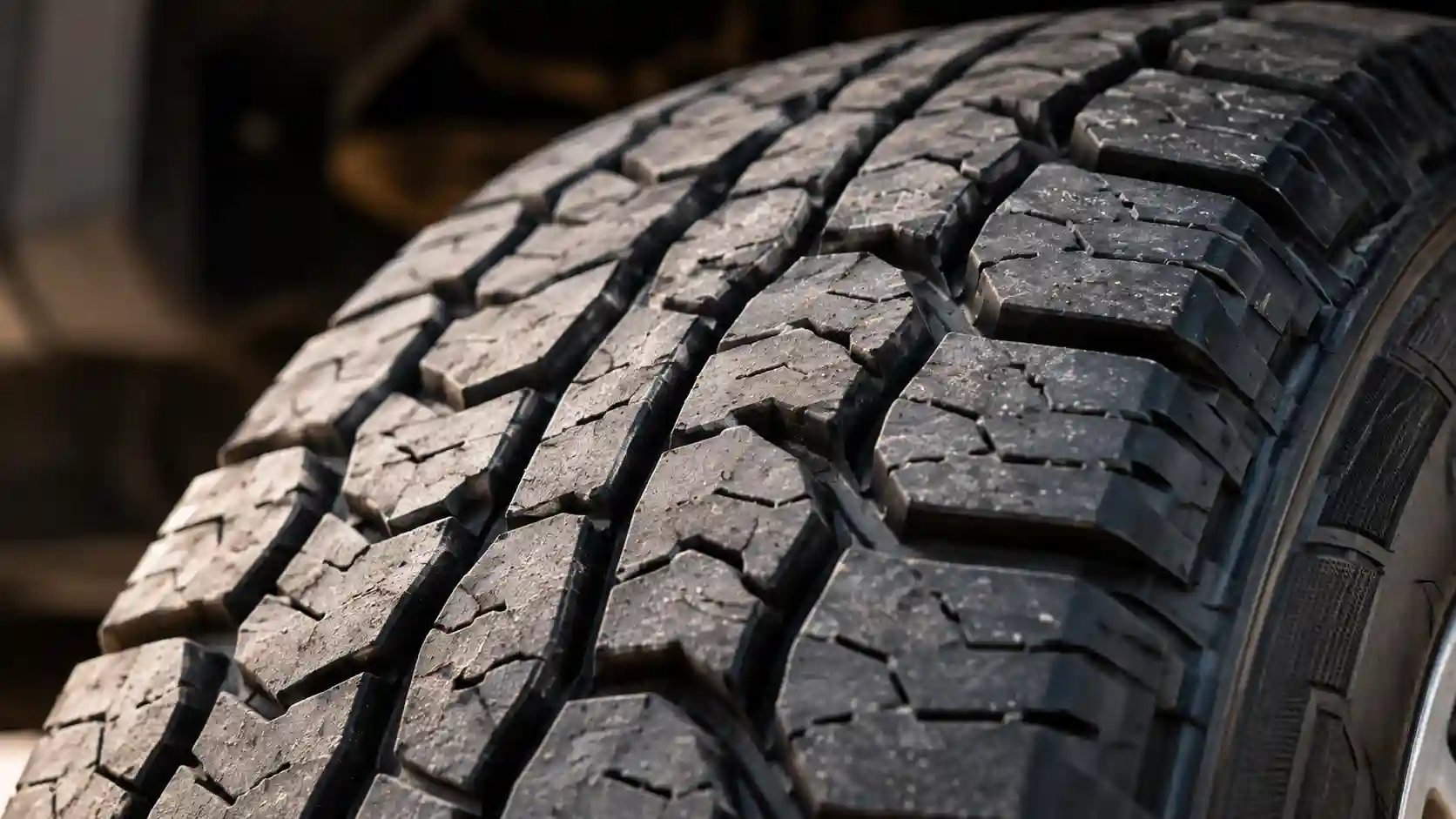
Tread depth can be measured. The National Highway Traffic Safety Administration says a tire is worn out and unsafe once the tread wears down to 2/32 of an inch, the point where the built-in tread wear indicators (the raised bars between the grooves) are flush with the surrounding tread. NHTSA’s at-home check: place a penny in the tread groove with Lincoln’s head upside down and facing you. If you can see the top of his head, the tire needs to be replaced. (Source: NHTSA, Tires | TireWise.)
On a used tire, check more than one spot. Wear should be even across the tread. Uneven wear can point to an alignment or suspension problem on the vehicle the tire came from, and that wear stays with the tire.
Age matters even when the tread looks fine
A tire can have plenty of tread left and still be unsafe to drive on. Rubber ages over time, whether or not the tire has been driven. NHTSA notes that some vehicle and tire manufacturers recommend replacing tires that are six to ten years old, regardless of remaining tread. NHTSA also lists sunlight, warmer climates, poor storage, and infrequent use as factors in tire aging, and notes that aging is a bigger concern in the more southern parts of the Sun Belt states. A used tire that spent years outdoors in the sun has been aging the entire time. (Source: NHTSA, Tires | TireWise.)
You can check a tire’s age yourself. Look on the sidewall for the DOT identification number. The last four digits are a date code: the first two digits are the week of the year, and the last two are the year. NHTSA gives the example of a tire marked 0308, made in the third week of 2008. If a used tire’s date code places it near or past that six-to-ten-year range, we recommend passing on it regardless of price.
The same applies to spares. Because tires degrade over time, NHTSA recommends not using a full-size spare as a replacement for worn tires, except in emergencies such as replacing a flat. A spare ages in the trunk like any other tire.
What a used tire is actually hiding
The U.S. Tire Manufacturers Association, the trade group representing tire makers, states this plainly: “while new tires must meet stringent federal safety standards to be sold in the U.S., worn tires can be resold as used with virtually no restrictions.” Their conclusion is that reselling a used tire as a replacement is “a risky proposition for motorists.” (Source: USTMA, Used Tires.)
USTMA’s concern is not tread or price. It is that a seller usually cannot tell you with certainty how a used tire was driven, whether it was stored properly, or whether it was ever run flat or repaired. You cannot fully check for yourself either. USTMA notes that damage or improper repairs to a tire’s inner liner (the layer that holds the air) are only visible after the tire is demounted from the wheel, and even then it takes a qualified technician to evaluate. We would pass on any tire with a visible bulge, a lump, cracking in the sidewall, or a repair near the sidewall or shoulder, however good the tread looks.
Used tires and all-wheel-drive vehicles
If your vehicle has all-wheel drive, take care before pairing a used tire with three others. Some AWD systems are sensitive to differences in tread depth between tires. Check your owner’s manual before mixing tire ages or brands on an AWD vehicle, or ask us and we will tell you whether a used tire is a good fit for your vehicle.
When to skip the used tire and go new
A used tire is a reasonable option for a low-mileage second vehicle, a trailer that sits most of the year, or a same-day replacement after a blowout on a tight budget. It is the wrong choice when:
- You are about to put many highway miles on the vehicle, especially in summer heat, since NHTSA counts warm climates among the factors in tire aging.
- The tire is going on the steer position of a truck.
- The seller cannot answer basic questions about where the tire came from or whether it has been repaired.
Questions to ask before you buy a used tire
Before you buy, ask how old the tire is, whether it has ever been repaired, and whether it can be inspected off the wheel before it is mounted on your vehicle. A reputable seller should be able to answer all three. If no one can, treat that as a warning sign.
E&C carries both new and used tires and mounts them wherever your vehicle is, across Amarillo and the surrounding Panhandle. We quote the price by phone before we drive out, so you know the cost before we arrive. If you are not sure whether the tire on your vehicle needs to be replaced or only needs air, call and we will help you decide.
Call us for new or used tires
Whether you need a used tire mounted today or want a second opinion on the one you are driving on, call (806) 471-0109 or request service online. We handle new and used tire sales and mounting and roadside tire service across Amarillo and the Panhandle.